Tips
Youth Sports Communication Tips: 10 Rules Every Coach Should Follow
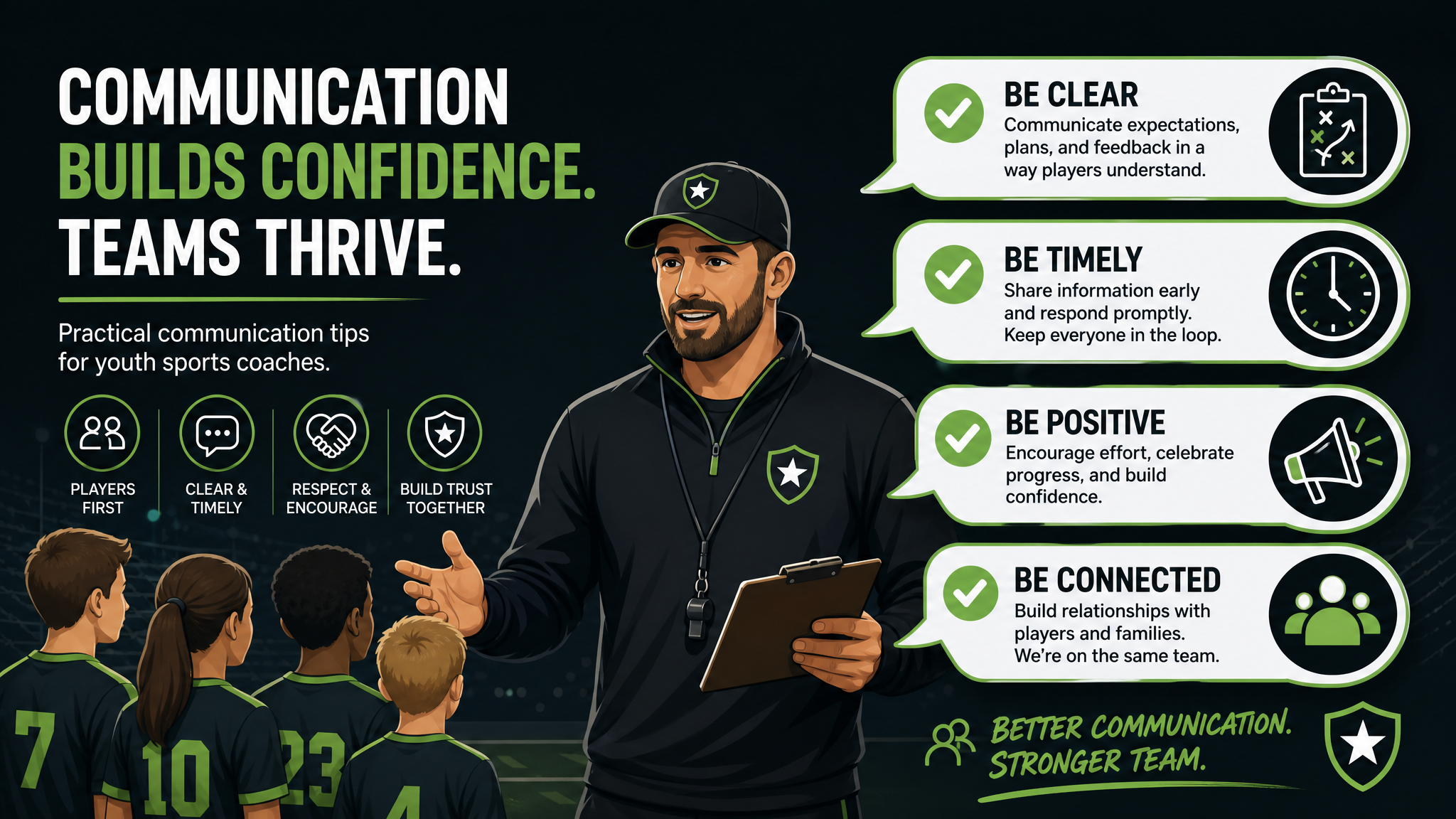
Good coaching is not just about what happens on the field. It is also about how clearly you communicate off the field.
In youth sports, communication can make or break the experience for players, parents, and coaches. Missed messages lead to confusion. Vague updates lead to frustration. Too many channels lead to chaos.
The fix is not more communication. It is better communication.
Here are 10 coach communication tips that make youth sports easier to manage.
1. Send one clear message at a time
The fastest way to confuse families is to bury the key point.
If the practice is canceled, say that first. If the game moved fields, say that first. If you need parents to RSVP, say that first.
Every message should answer:
- •What happened?
- •Who needs to know?
- •What should they do next?
Keep it simple.
2. Use the same place for the same kind of update
One of the best team communication best practices is consistency.
If schedule changes always live in one place, parents know where to look. If team chat is for day-to-day updates, people stop hunting through old texts.
That is one reason coaches switch to Squadline. It keeps communication, scheduling, and team info together instead of scattering everything across text threads and email chains.
See the team communication feature and scheduling tools.
3. Be early, not just accurate
A correct message sent too late still creates problems.
If the field changes at 3:00 and you send the update at 3:20, families are already driving the wrong way.
Send important updates as soon as you know them. Early communication gives people time to adjust.
4. Keep your tone calm and direct
Youth sports can get emotional fast. Parents are juggling work, siblings, weather, traffic, and schedules. If your messages sound rushed or defensive, tension goes up.
A calm tone works better:
- •Be direct
- •Avoid overexplaining
- •Do not sound annoyed
- •Give the next step clearly
You do not need to write essays. You need to be clear.
5. Separate urgent updates from routine reminders
Not every message deserves the same level of urgency.
Helpful categories:
- •Urgent: game cancellation, weather delay, safety issue
- •Routine: practice reminder, uniform note, RSVP request
- •Informational: season calendar, team photo day, snack schedule
When everything is treated like an emergency, nobody knows what matters.
6. Confirm important changes
If the update really matters, make sure people saw it.
Examples:
- •Reply with a thumbs-up
- •Use RSVP tracking
- •Ask for a quick acknowledgment
- •Follow up once if needed
That is especially useful when plans change close to game time.
7. Keep messages short enough to read quickly
Parents are usually reading on their phones while doing something else.
That means your message should be easy to scan.
A strong message might look like this:
“Practice moved to Field 3 tonight because Field 1 is closed. Same time, 6:00 PM. Please arrive by 5:50.”
Short. Clear. Useful.
8. Use names and roles when needed
If a message only applies to certain people, say so.
Examples:
- •Goalkeepers only
- •U12 parents
- •Travel team families
- •Players who need uniforms
This prevents unnecessary clutter and makes the right people feel seen.
9. Plan your communication before the season starts
A lot of communication problems happen because nobody set a system early.
Before the season begins, decide:
- •Where team updates will live
- •How often you will post
- •What counts as urgent
- •Who manages reminders
- •How parents should ask questions
A little structure up front prevents a lot of stress later.
10. Make it easy for parents to stay informed
The best communication system is the one people actually use.
If parents have to dig through five apps to find one practice time, they will stop paying attention.
That is why a single app for youth sports communication matters so much. Squadline gives coaches and families one place to keep up with chat, schedules, and updates. It reduces the back-and-forth and helps everyone stay on the same page.
What great youth sports communication looks like
When communication is working well, you will notice a few things:
- •Fewer repeat questions
- •Fewer missed updates
- •Less confusion before games
- •More consistent attendance
- •Less admin work for coaches
That is the real goal.
You are not trying to send more messages. You are trying to make the team easier to run.
Common communication mistakes to avoid
Too many channels
If you send updates in text, email, and another app, people will miss something.
Too much detail
Long messages are hard to read. Keep the main point up front.
No clear action
If you need a response, say so. If no response is needed, say that too.
Inconsistent timing
Random communication creates anxiety. A steady rhythm helps.
Leaving parents guessing
Never assume the update is obvious. Say it plainly.
Why Squadline is a better communication solution
Squadline is built to solve the exact problems coaches run into every week:
- •Too many message threads
- •Too many schedule changes
- •Too much repetition
- •Too much confusion for families
Instead of forcing you to stitch together group texts, calendars, and spreadsheets, Squadline brings it into one place.
That makes it easier for coaches to communicate clearly and easier for parents to keep up.
If you want a cleaner setup, start here:
Final take
Strong youth sports communication is not about being loud. It is about being clear, timely, and consistent.
If you follow these 10 rules, your team will spend less time confused and more time focused on the game.
And if you want a system that makes communication easier from the start, Squadline is built for that.
When to use chat, email, or alerts
Not every communication channel should do the same job.
A simple rule:
- •Chat for ongoing team conversation
- •Email for longer season-wide information
- •Alerts for urgent changes that people need to see quickly
If you mix those jobs together, people stop trusting the channel.
What to do when parents do not respond
If you need a reply and do not get one, do not panic.
Try this sequence:
- •Send the original message clearly
- •Follow up once with a deadline
- •Use a quick acknowledgment like thumbs-up or RSVP
- •Escalate only when needed
Most of the time, parents are busy rather than uncooperative.
Create a communication standard for assistants too
If you have assistant coaches, team managers, or volunteers, everyone should follow the same rules.
That means:
- •Same tone
- •Same posting location
- •Same urgency levels
- •Same reply expectations
The team feels more professional when communication is consistent.
Communication that saves time
Good communication is not just nicer. It is cheaper in time.
When the team knows what is happening, coaches spend less time answering repeat questions and parents spend less time checking multiple places.
That is exactly why Squadline works well as a communication solution: it puts the routine stuff in one place so the team can move on.
Sample message templates
Here are a few examples you can adapt:
- •“Practice is canceled tonight because of weather. Next update will come by 4 PM if we can reschedule.”
- •“Game time moved to 11:30 AM. Same field, new arrival time is 10:45 AM.”
- •“Please reply by tonight if your player will miss Saturday’s match.”
Templates like these make it easier to stay consistent.
The big payoff
When coaches communicate well, families relax. The whole season feels smoother.
That is the real value of good systems: fewer surprises, fewer repeat questions, and less friction for everyone.
Build a simple communication policy
If you want the whole team to stay aligned, write down the rules once and share them early.
Include:
- •Where updates will be posted
- •Which messages are urgent
- •How long parents should expect to wait for a reply
- •Who handles schedule changes
- •What families should do if they miss an update
That removes guesswork and makes communication feel fair.
Keep a repeatable cadence
If you post updates on a regular rhythm, families stop wondering when they will hear from you.
That small sense of predictability lowers stress for everyone.
Example of a full weekly rhythm
A simple weekly rhythm might look like this: Sunday night you post the schedule, Tuesday you send a reminder, and game day you send one final check-in with arrival time and any weather notes. That is enough for most teams. The point is not constant noise. The point is dependable communication that people can trust.
If you want fewer questions and smoother practices, that kind of rhythm goes a long way.
Ready to simplify your season?
Download Squadline free and get your team organized in under 5 minutes.